


Here's something many homeowners and renters don't find out until it's too late - a standard homeowners or renters insurance policy won't pay a single dollar toward earthquake damage or flood damage. These aren't just policy fine print facts. They're separate coverage types entirely, and without them, you're absorbing that financial danger yourself. For many homeowners, that means their single largest asset - their home - is only partially protected.
If you've ever thought "I probably don't need it" or "I've never had a problem before," you're not alone. Those are common thoughts, and they're worth looking at. The goal here isn't to alarm you - it's to give you a clear, easy look at what earthquake and flood insurance actually are, what they cover, how much they cost, and how to figure out if they make sense for your situation in Ventura County.
Whether you own your home, rent an apartment, or are somewhere in between, this post will cover the essentials so you can make a well-educated choice - not a panicked one.
Key Takeaways
- Standard homeowners and renters insurance policies cover zero earthquake or flood damage - these require completely separate policies.
- Ventura County ranks at the 99th-100th percentile nationally for both earthquake and flood risk, making coverage especially critical.
- Post-wildfire burn scars worsen flood danger significantly, even for properties outside official FEMA flood zone boundaries.
- Earthquake deductibles are percentage-based, not flat amounts - a 15% deductible on a $700K home means $105,000 out-of-pocket.
- NFIP flood policies exclude temporary living costs, detached structures, vehicles, and provide very limited basement contents coverage.
Why Ventura County Sits at the Top of the Risk Scale
The FEMA National Risk Index puts Ventura County at the 99th percentile for natural hazard danger. For earthquakes specifically, the county scores at the 100th percentile - meaning it ranks higher than nearly every other county in the country. Flood danger sits at the 99th percentile. Those numbers translate directly into financial exposure for anyone who owns property here.
The geography explains quite a bit. Ventura County sits on top of and between multiple active fault systems. The San Andreas Fault runs through the northern edge of the county. But it's not alone. The Oak Ridge Fault and the Red Mountain Fault cut through the region, and each one carries the potential to produce a damaging earthquake with little to no warning.
Flood exposure comes from a different angle but is just as serious. The county has low-lying coastal areas and river corridors that fall inside designated floodplains. Heavy rainfall in those zones can send water into homes and businesses fast.
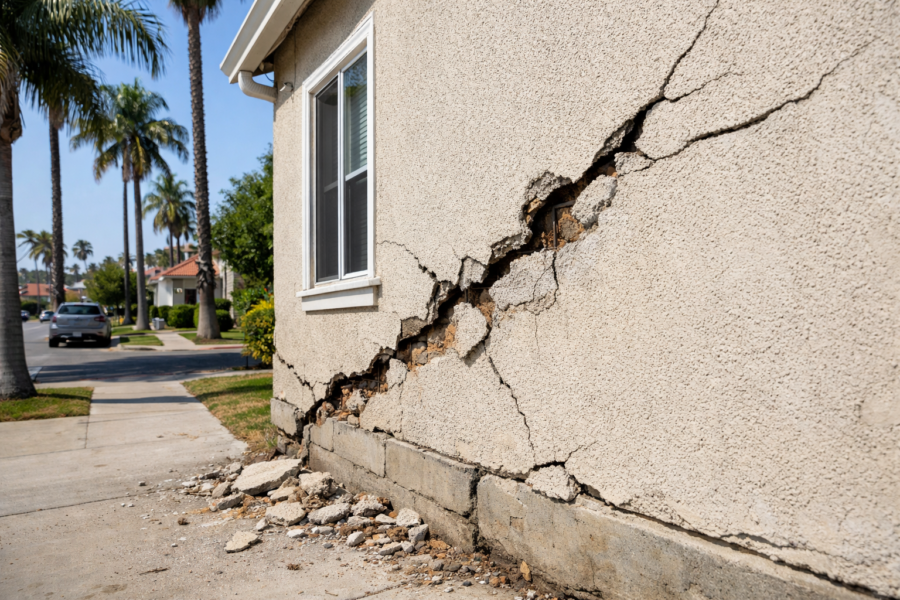
The wildfire connection makes the flood picture more complicated. When hillsides burn, the vegetation that normally holds soil and absorbs rain is gone. That leaves the ground hard and bare, so water runs off slopes into neighborhoods below instead of soaking in. Post-fire flood events have repeatedly hit Ventura County communities in the years following destructive fire seasons, and the Thomas Fire aftermath is one of the more documented examples of this chain reaction in the state.
Put that together and you get a county where the ground can shake, rivers and creeks can overflow, and stripped hillsides can send debris flows into residential streets - sometimes in the same season. The financial exposure for property owners is a baseline reality built into the community itself, and earthquake and flood coverage is one of the most important protections available to Ventura County residents.
What Earthquake and Flood Policies Actually Cover
Most homeowners in Ventura County get earthquake coverage through the California Earthquake Authority, or CEA - it's a publicly managed program that works alongside your standard home insurance policy. Private insurers also write earthquake policies, so it's worth getting a quote to see what fits your situation.
A standard CEA policy covers the structure of your home, your personal belongings, and temporary living costs if you have to leave while repairs happen. That last part - called loss of use - can be helpful when repairs take months. Landscaping, pools, and detached structures like garages are usually not included.
Flood insurance works differently. Most get it through the National Flood Insurance Program, known as the NFIP, which is backed by the federal government. Private flood policies have grown more competitive and sometimes cover things the NFIP does not.
One thing to know about NFIP flood policies: they split your coverage into two separate parts - one for the building and one for its contents. You can buy one without the other. Finished basements are mostly excluded from contents coverage, and personal property kept in a basement gets very limited protection.
| Coverage Type | Earthquake (CEA) | Flood (NFIP) |
|---|---|---|
| Dwelling/Structure | Yes | Yes |
| Personal Property | Yes (optional) | Yes (separate policy) |
| Loss of Use | Yes (optional) | No |
| Landscaping/Pools | No | No |
| Finished Basements | Limited | Very limited |
| Who Offers It | CEA or private insurers | NFIP or private insurers |
Private market alternatives can extend coverage in areas where government programs fall short. They offer higher limits and wider terms, though pricing goes up with that. Reach out to our team to explore options that go beyond standard program limits.
How Premiums Are Calculated for Ventura County Properties
The California Department of Insurance sets a base rate of $1.57 per $1,000 of insured value; it's the starting point. But Ventura County sits in a high-danger tier, so a 1.30x multiplier gets applied on top of that base. For a home insured at $600,000, that adjustment alone can add a big amount to your annual bill before any other things come into play.
Construction type is one of the biggest things that moves your premium up or down. Wood-frame homes sit at roughly 0.94x the baseline rate because they flex more during seismic activity. Brick and unreinforced masonry construction can add around 38% to your premium because those materials are more likely to sustain damage in a quake.
The age of your home also factors in. Older homes built before modern building codes were in place are rated as higher risk, and insurers will price that in. A retrofit or seismic upgrade can sometimes bring that number back down, so it's worth asking your insurer about it. You can also find helpful guidance on our Coverage Corner for tips on managing your costs.
Proximity to a fault line or a FEMA-designated flood zone has a direct effect on your rate. Homes closer to the San Andreas or Pitas Point fault systems will see higher earthquake premiums, and properties inside a Special Flood Hazard Area will be priced accordingly for flood coverage. If you also own a home, auto, or renters policy, bundling options may help offset some of these increases.
| Factor | Effect on Premium |
|---|---|
| Wood-frame construction | ~0.94x baseline |
| Brick or masonry construction | +38% above baseline |
| Ventura County risk tier multiplier | 1.30x applied to base rate |
| Pre-code construction (no retrofit) | Higher rate, varies by insurer |
| Location in a flood hazard zone | Higher flood premium |
All of these things stack together to produce your final quoted rate, which is why two homes on the same street can end up with very different premiums. Our team can walk you through exactly how each factor applies to your specific property.
Choosing a Deductible That Won't Wreck You After a Disaster
Earthquake deductibles work very differently from what most homeowners expect. Instead of a flat dollar amount like you'd see on an auto policy, they're calculated as a percentage of your home's insured dwelling value. That distinction matters quite a bit when the bill comes due.
A 5% deductible on a $600,000 home means you're responsible for $30,000 before your policy pays anything. At 15%, that number jumps to $90,000. That's why your deductible choice is a choice about how much financial strain you can personally absorb after a damaging event - not just a line item.

The tradeoff between premium cost and out-of-pocket exposure is worth looking at. A 5% deductible costs roughly 42% more in annual premium than a standard 15% baseline. Dropping to a 25% deductible saves about 22% on premium but leaves you responsible for a much bigger share of repair costs if something goes wrong.
| Deductible Level | Premium Impact vs. 15% Baseline | Out-of-Pocket on $400K Home | Out-of-Pocket on $700K Home |
|---|---|---|---|
| 5% | ~42% higher premium | $20,000 | $35,000 |
| 15% (baseline) | Standard rate | $60,000 | $105,000 |
| 25% | ~22% lower premium | $100,000 | $175,000 |
A lower deductible does cost more each year. But it limits what you'd need to pull together in a crisis. A higher deductible lowers your annual cost but assumes you have savings ready to go.
Consider what you actually have in accessible savings before picking a number. The premium savings from a 25% deductible look interesting until you see what that figure looks like in dollars on a $700,000 Ventura County home. Our team can help you work through those numbers before you commit to a deductible level.
Flood Insurance Gaps That Catch Ventura County Homeowners Off Guard
A standard NFIP flood policy does not cover everything you might expect it to. If your home is damaged badly enough to need temporary housing, you're paying for that yourself. Detached structures like sheds or guesthouses are not included either, and neither is your car - it falls under auto coverage.
Below-grade spaces are another blind spot. Finished basements, sunken living areas, and below-ground garages are either excluded or covered only in a very limited way under NFIP policies; it's worth learning about rather than assuming your renovation downstairs is protected.
Between 2020 and 2024, the average NFIP flood claim payment was $82,614. Think about whether that number would actually cover your loss - especially if your home needs extensive repairs, you have high-end finishes, or you're renting elsewhere for a few months during reconstruction.
There's also the waiting period. NFIP flood policies don't take effect until 30 days after purchase in most cases. If storms are already in the forecast and you don't have coverage, a last-minute buy won't help you.
Ventura County has an added layer of difficulty because of its burn scars. After a wildfire strips vegetation from hillsides, the soil loses its ability to absorb water. Properties near recent fire areas face much higher danger of flooding and mudflows - even properties that fall outside official FEMA flood zone maps. Your address alone doesn't tell the whole story.
Private flood insurance can fill in some of these gaps - it can cover extra living costs, higher structural limits, and faster claims processing in some cases - so it's worth comparing it against what an NFIP policy would and wouldn't do for your home. See what other homeowners have said about working with us to find the right coverage.
Let's pull everything together to see where to start.
Getting Covered Before the Ground Shakes or the Water Rises
Waiting is a choice. Waiting for rates to drop, for a less busy season, or for more certainty before purchasing coverage is a choice - one that leaves you exposed in the meantime. Earthquakes don't announce themselves, and Ventura County's flood events tend to arrive faster than forecasts predict.

Ventura County ranks among the highest-danger counties in the nation for seismic activity and flood exposure. In that context, carrying adequate coverage is an easy response to where you live. You want to make sure a single bad day doesn't become a financial catastrophe.
FAQs
Does standard homeowners insurance cover earthquake or flood damage?
No. Standard homeowners and renters insurance policies cover zero earthquake or flood damage. These require completely separate policies purchased in addition to your standard coverage.
Why is Ventura County considered high-risk for earthquakes and floods?
Ventura County ranks at the 99th-100th percentile nationally for both earthquake and flood risk. Multiple active fault systems, coastal floodplains, and post-wildfire burn scars all contribute to this elevated danger.
How do earthquake insurance deductibles work?
Earthquake deductibles are percentage-based, not flat dollar amounts. A 15% deductible on a $700,000 home means $105,000 out-of-pocket before your policy pays anything.
What does an NFIP flood policy not cover?
NFIP policies exclude temporary living expenses, detached structures, vehicles, and provide very limited coverage for finished basements and below-grade spaces.
Does living outside a FEMA flood zone mean I'm safe?
Not necessarily. Post-wildfire burn scars significantly increase flood and mudflow risk for properties outside official FEMA flood zone boundaries, particularly near recently burned hillsides in Ventura County.
With over 25 years of combined experience in the Insurance Industry and excellent custom service, we are your trusted local brokers specializing in all types of insurance solutions.